
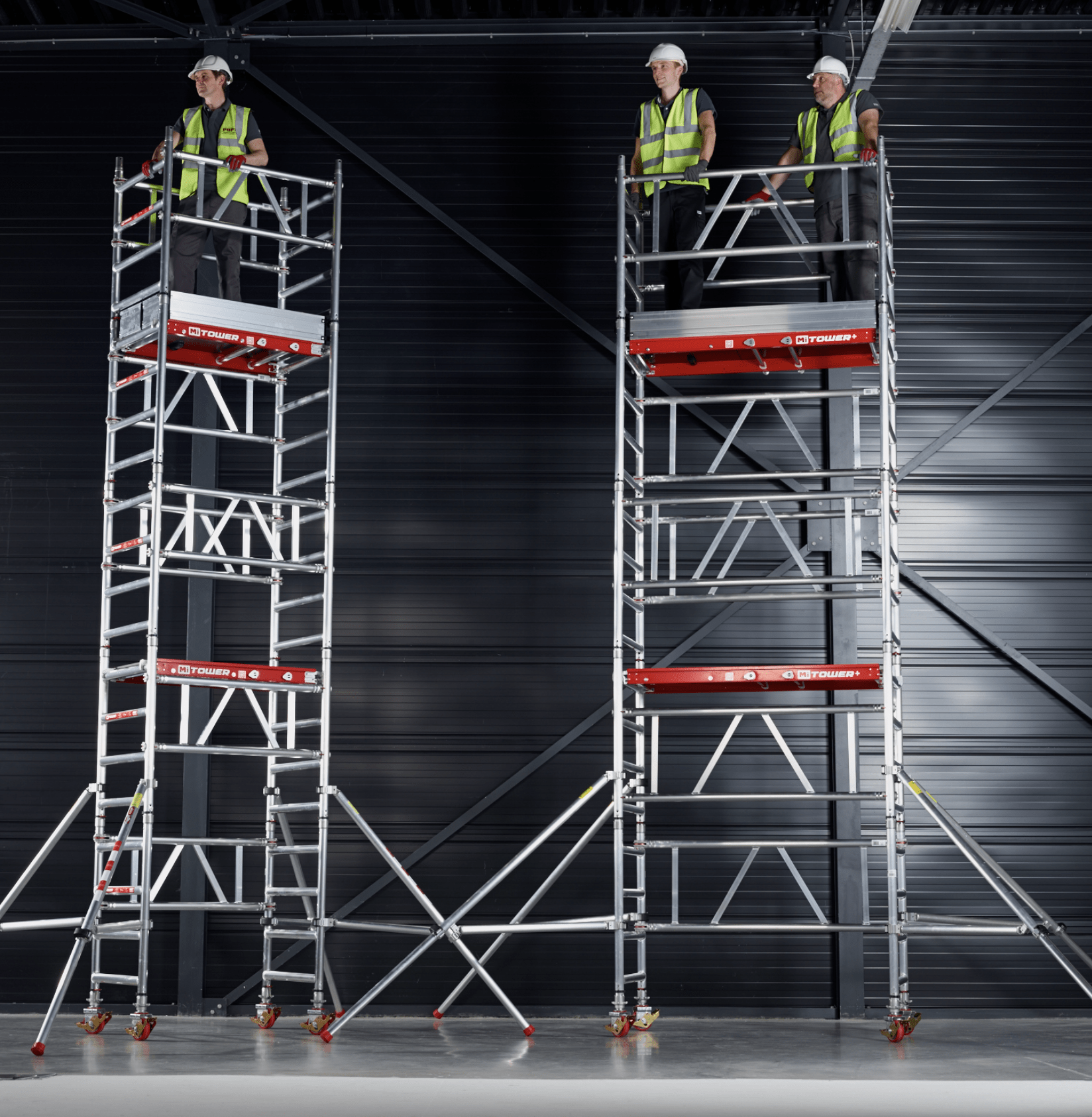
Q: What is a mobile tower scaffold?
A: A mobile tower scaffold (also called a rolling scaffold tower or mobile access tower) is a free-standing, wheeled platform structure designed to give workers safe elevated access at varying heights. Unlike traditional tube and coupler scaffolding that gets bolted or tied to a building, a mobile tower sits independently on lockable castor wheels and can be repositioned around a worksite without dismantling the whole thing. Most are aluminium-framed, though steel versions exist for heavier-duty applications. The standard design includes vertical frames, horizontal braces, a working platform with guardrails on all four sides, toeboards, and an internal ladder or stairway for access.
Q: How does a mobile tower scaffold work?
A: The system works by stacking modular frame sections vertically, locked together by pins or snap-fit connectors. Using Through-The-Trap (3T) or Advance Guardrail method (AGR) to assemble and dismantle the scaffold. The working platform sits at the top, enclosed by guardrails. Castor wheels at the base allow the whole structure to roll — but only when the tower is empty and you’ve released the wheel brakes. Once positioned, you lock all four castors, ensure the tower is plumb (vertical), and only then send workers up. The height-to-base ratio is critical. SS659 and WSH Scaffold Regulations 2011 states that a free standing tower scaffold Base to Height ratio is 1:3. Which means if the short side of the scaffold (with stabilisers) is 1m the maximum platform height is 3m. For mobile tower scaffold according to EN1004-1:2020, the maximum platform height for outdoor is 8m and indoor is 12m
Q: What are mobile tower scaffolds used for?
A: They’re used across just about every industry that needs temporary elevated access: painting and decorating, ceiling and M&E installation, façade inspections, warehouse racking work, exhibition and events fit-out, airport maintenance, industrial plant inspections, and general building maintenance. In Singapore’s construction and facilities management sector, you’ll find mobile towers on MRT station fit-out jobs, industrial plant turnarounds, and shophouse renovation projects — anywhere a crew needs to shift access points regularly without the cost and lead time of conventional scaffolding erection.
Q: Do you need a licence to erect a mobile tower scaffold in Singapore?
A: In Singapore, the Workplace Safety and Health Scaffold Regulations 2011 require that any scaffold has to be erected by a trained scaffold erector under the supervision of a trained scaffold supervisor. Under SS659, scaffold users with a valid PASMA Tower for User card will be able to assemble and dismantle the mobile tower scaffold under the supervision of a PASMA Tower for Manager card holder.
Mobile tower scaffolds are one of the most practical access solutions on any dynamic worksite. Get the basics right — height-to-base ratio, castor braking, guardrail integrity, and trained personnel — and you’ve got a system that’s both fast and safe. Next article: we dig into how to choose the right mobile tower scaffold height for your job.
— CYCC Access Systems Pte Ltd | Scaffold Rental & WAH Consultancy | Singapore
